Water in Your Crawl Space: What to Check and What to Do Next
Is water in a crawl space normal?
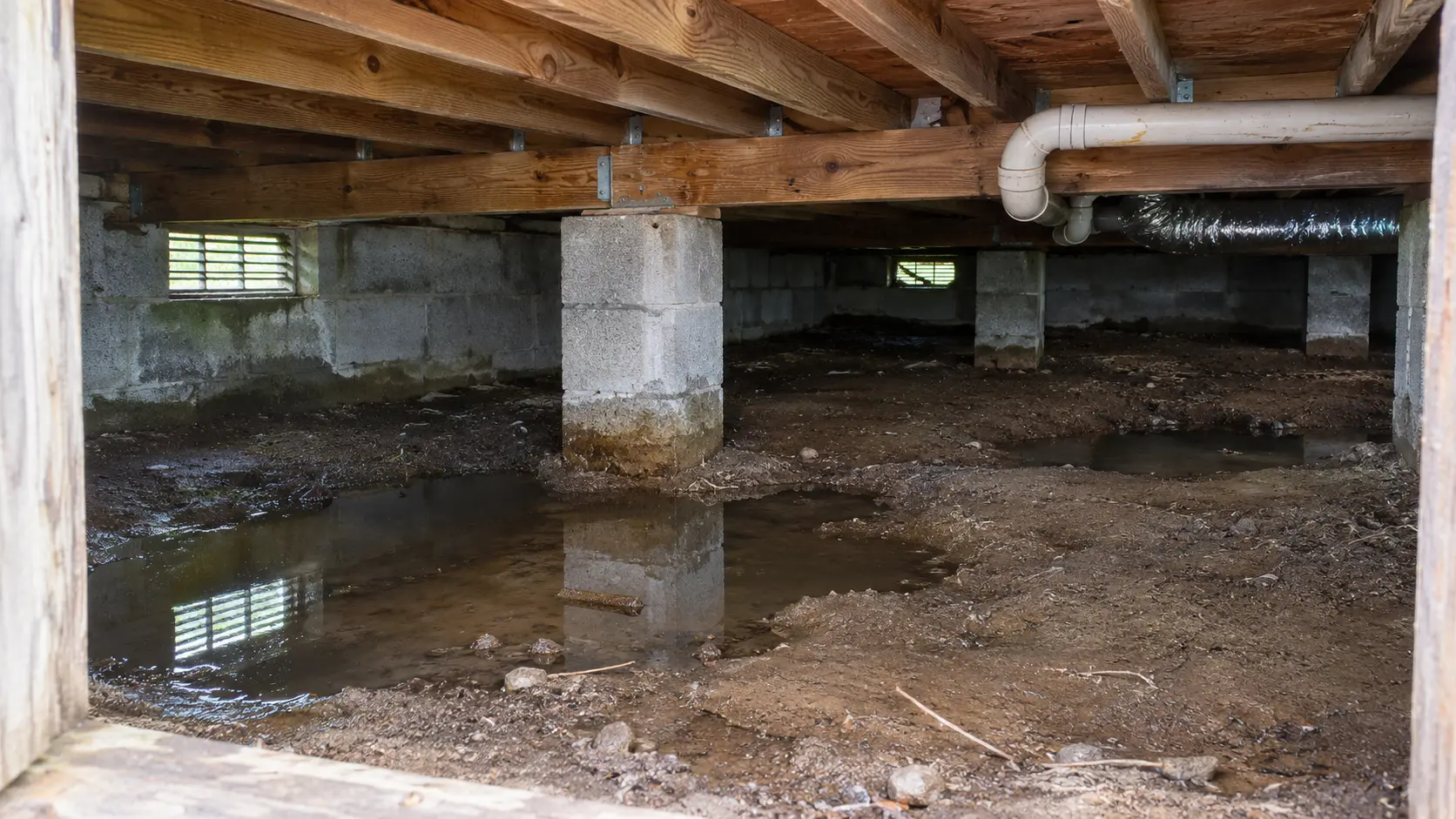
Standing water is a problem to investigate, even if it appears only after heavy rain. A damp-looking surface can have several causes; a puddle means water is collecting where it shouldn’t. Repeated wetting can affect insulation and wood, and persistent moisture makes mold more likely. The U.S. Department of Energy’s Building America guidance lists puddles, water stains, wet insulation, and musty odors among signs worth checking.
You do not need to know the solution the moment you see water. First, decide whether it is safe to approach the area. Then identify the source of the water. Removing a puddle without fixing the source leaves the underlying problem in place.
What should you do first?
- Stay out of any flooded or unsafe area. Do not enter standing water near wiring, electrical equipment, or damaged structural elements. Photograph what you can safely see from the access point. Building America specifically advises against entering a section with significant standing water or touching exposed wiring. Source: DOE Building America.
- If floodwater may be near electrical equipment, get qualified help. The CDC’s flood-reentry guidance says not to operate electrical switches or tools while standing in water. If the main disconnect can only be reached through water, call an electrician.
- Record when the water appears. Did it follow a storm, happen while a fixture was in use, or continue through dry weather? Note the location of the wet area and any odors or visible leaks. This can help the person inspecting the space find the source.
- Arrange removal and drying promptly. If there is extensive water, sewage, suspected contamination, or damage, use a qualified cleanup professional. The EPA recommends drying flood-wet materials as quickly as possible, ideally within 24–48 hours, to reduce mold risk.
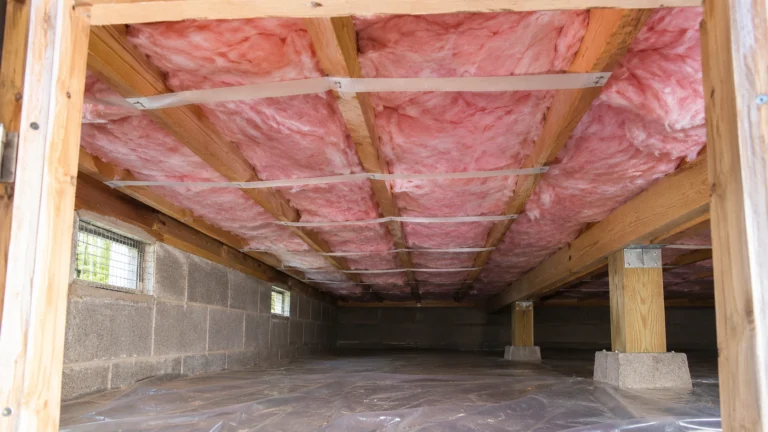
Do not install new insulation or seal the crawl space over wet materials. DOE guidance calls for water and drainage problems to be addressed before an existing crawl space is sealed or insulated. Source: Building America.
Why is there water under the house?
Rainwater collecting beside the foundation
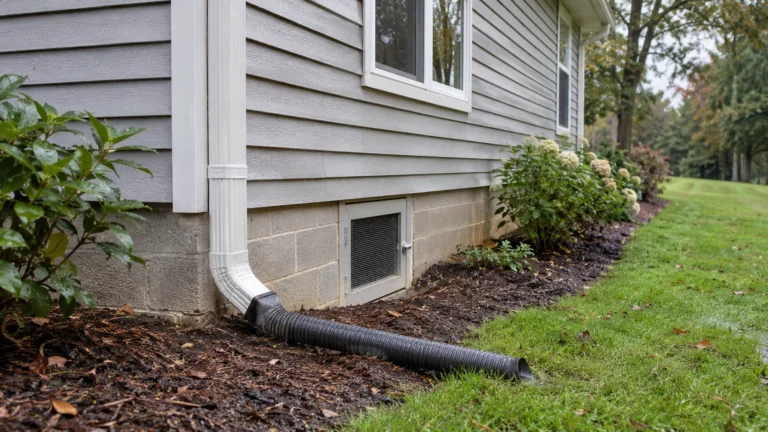
If water appears after heavy rain, inspect the outside of the house from a safe place. Clogged or short downspouts, overflowing gutters, ground sloping toward the house, and low spots near the access door can direct water toward the foundation. DOE’s pre-retrofit assessment guide specifically recommends checking roof runoff, site grading, and the access door when investigating crawl-space moisture.
That timing is a clue, not a diagnosis. A professional may need to check whether surface runoff, groundwater, or another leak is responsible. For an overview of longer-term options, see our guide to crawl space waterproofing.
A plumbing or equipment leak
Water that appears regardless of the weather may come from a supply line, drain, appliance, or HVAC condensate. Look for visible drips only from a safe access point; avoid touching damaged wiring or crawling into pooled water. Building America lists plumbing leaks and equipment problems among common crawl-space moisture sources. Source: DOE Building America.
Soil moisture or humid air
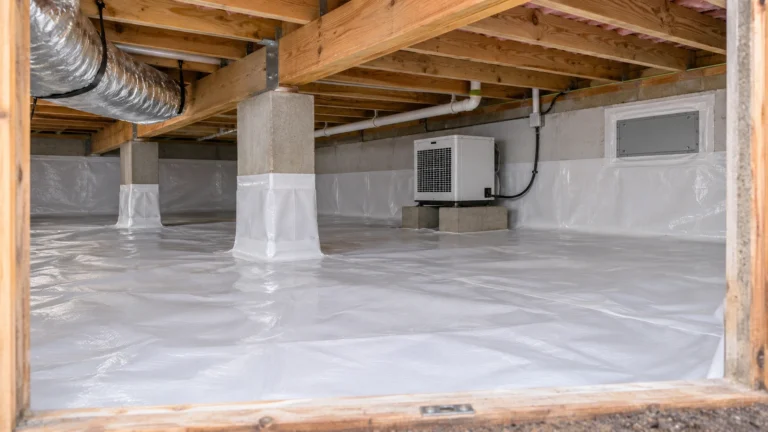
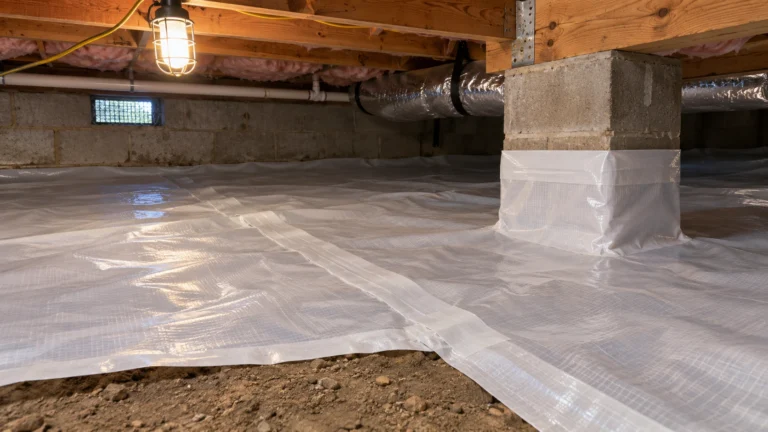
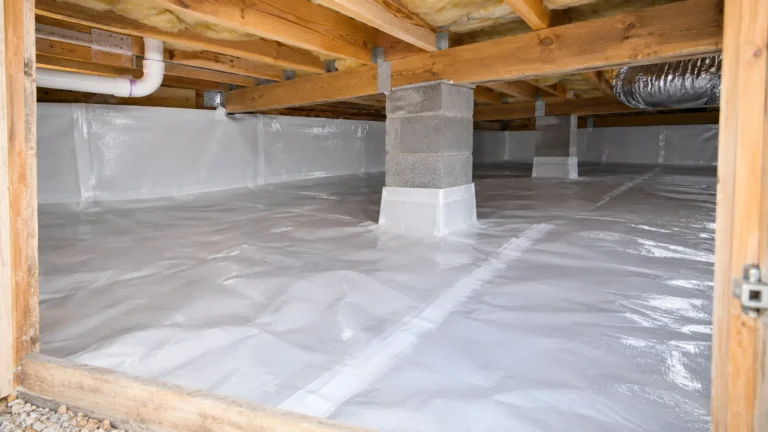
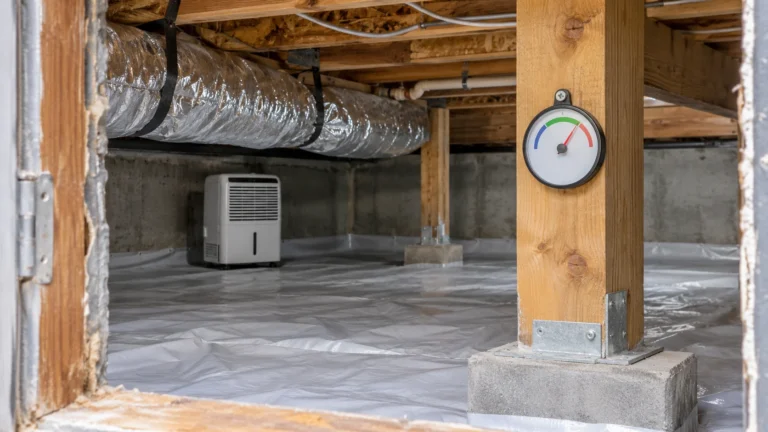
Even without a visible puddle, bare soil can release water vapor, and humid air may condense on cooler surfaces. Wet insulation or a musty smell can signal a moisture problem that needs assessment. A properly installed ground barrier is one possible part of control, but it does not fix an active water leak. Learn how soil moisture and humidity differ in our crawl space moisture-control guide. Source: DOE Building Science Education.
Water after heavy rain: what should you check?
Walk around the outside after the storm has passed. Check whether the gutters overflowed, where each downspout discharges, whether rainwater pools against the foundation, and whether water runs toward the crawl-space access opening. Take photos and note how long the puddles remain. Then ask a qualified professional to trace the actual route of entry, particularly if the problem keeps returning.
Solutions can include repairing a gutter or pipe, redirecting runoff, correcting grading, or installing appropriate drainage. The right fix depends on the source and the site; a sump pump can remove collected water but may not stop water from entering in the first place. DOE’s water-management guide treats drainage and outside water control as steps to address before sealing.
Can encapsulation solve standing water?
Encapsulation may be part of a broader moisture-control plan, but it should not cover up an unresolved water source. Before paying for a liner or insulation, ask what caused the standing water and what work will prevent it from recurring. If a contractor proposes drainage, get it itemized separately from sealing. Our crawl space encapsulation cost guide explains why quotes can vary so much.
When should you call a professional?
Get a qualified inspection if water returns after rain, remains pooled, reaches electrical or mechanical equipment, wets insulation or framing, or comes with an unexplained odor or suspected sewage. A persistent leak or visible wood damage also deserves a closer look. Ask the inspector to identify the source, document evidence, and separate immediate cleanup from long-term repairs.
If you plan to contact your insurer after a sudden water event, document the damage and review your specific policy and deadlines; coverage depends on the cause and policy terms. Do not assume that every crawl-space water problem is covered.
Common questions
Is water in a crawl space after heavy rain normal?
Heavy rain may help reveal the entry point, but recurring standing water is still worth investigating. Check roof runoff and surface drainage, then find out how water crosses the foundation or access opening. DOE’s inspection guide suggests checking after a significant rain event to detect active intrusion.
Can I dry it out and leave the cause for later?
Drying matters, especially after flooding, but the source also has to be corrected. Otherwise, water can return on the next storm or leak cycle. The EPA’s moisture guidance emphasizes fixing the water problem as part of controlling mold.
Will a dehumidifier remove standing water?
A dehumidifier removes moisture from air; it does not replace pumping out a puddle or correcting a leak. After the source is fixed and the space is dried, a professional can assess whether ongoing humidity control is needed. ENERGY STAR explains how dehumidifier capacity depends on both the size and dampness of a space.
The takeaway
Treat water under the house as a clue to investigate, not merely a puddle to hide. Stay out of unsafe areas, record when and where it appears, dry the space promptly with appropriate help, and correct the source before installing a liner or new insulation. That sequence gives any later moisture-control work a better chance of doing its job.