Crawl Space Vents: Open or Closed? A Guide for Homeowners
Should crawl space vents be open or closed?
There is no safe all-season answer based only on the month. A vented crawl space is designed with the space open to outside air and the insulated boundary at the floor above. A properly designed unvented, conditioned crawl space seals exterior vents and moves the insulated boundary to the foundation walls, while managing ground moisture and humidity. Simply shutting the vents changes only one part of that system. Source: U.S. Department of Energy Building America.
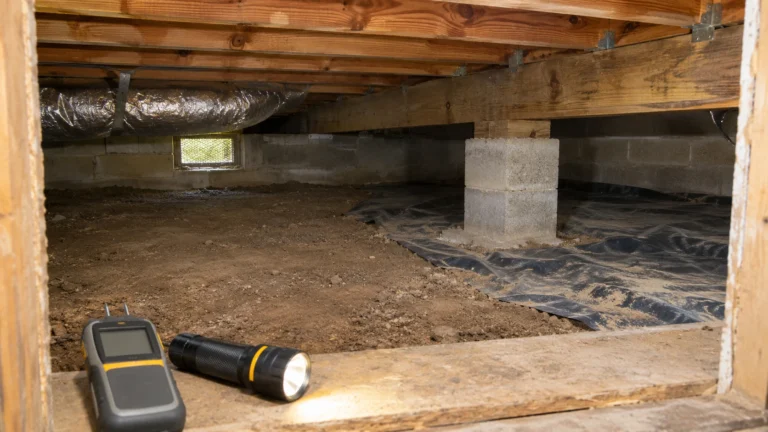
If your house has vents and a dirt floor, start by checking for standing water, exposed soil, damaged insulation, and musty odors. These clues matter more than a calendar rule. Do not permanently block vents until you understand the existing design and any local requirements.
Why do crawl spaces have vents?
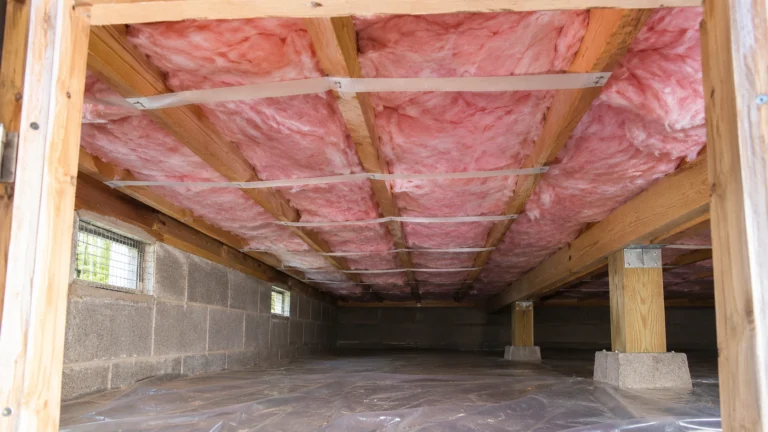
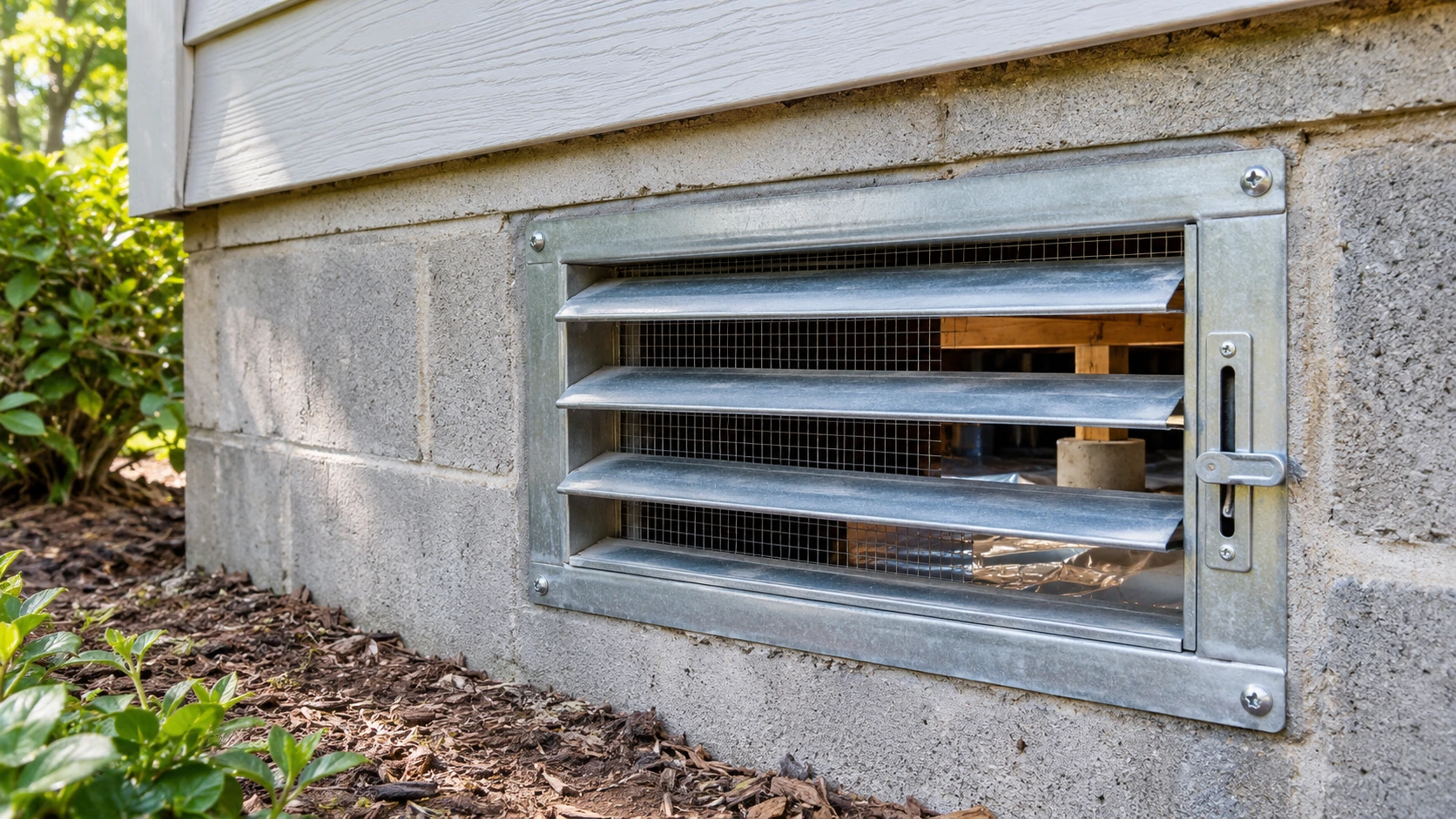
Traditional vented crawl spaces use openings in the foundation to exchange air with the outdoors. The living-area floor above is then insulated and air-sealed to separate the house from that unconditioned space. DOE’s code compliance brief describes this floor as the thermal boundary in a ventilated crawl space.
Vents do not guarantee drying. In humid climates, warm outside air may enter and condense on cooler joists or other surfaces, especially when the rooms above are air-conditioned. DOE’s unvented crawl-space guide explains why outside ventilation can add moisture under those conditions.
At the same time, an existing vented design needs an assessment before it is changed. A blocked vent does not by itself create a dry, conditioned space; soil moisture, water entry, insulation, and equipment still need a plan.
Should vents be closed in winter?
Cold outdoor air can make a vented crawl space colder and raise concerns about pipes and floors. That does not mean every homeowner should close every vent for winter. First, check how the floor and pipes are insulated, whether there is a ground vapor barrier, and whether the space has a working moisture and ventilation strategy. A seasonal cover used without understanding the design may hide persistent moisture rather than solve it.
DOE’s crawl-space inspection guide mentions foam blocks left in vents after “winterizing” as a condition to notice during inspection. If you want a permanent change, get a plan for the whole space instead of relying on a winter cover as the entire solution.
Should vents be open in summer?
Opening vents during a hot, humid summer may bring in air that carries more moisture, not less. When that air touches cooler framing or ducts, condensation can form. This is particularly relevant in humid parts of the U.S.; the actual risk depends on local weather and the temperature of surfaces in the crawl space. Source: DOE Building America.
If the space smells musty or insulation is wet, find the source. It could be humid outdoor air, soil vapor, rainwater, plumbing, or several factors together. Our crawl space moisture-control guide explains how to distinguish them. Opening more vents or adding a fan without a diagnosis can leave the underlying problem in place.
What does a proper sealed crawl space include?
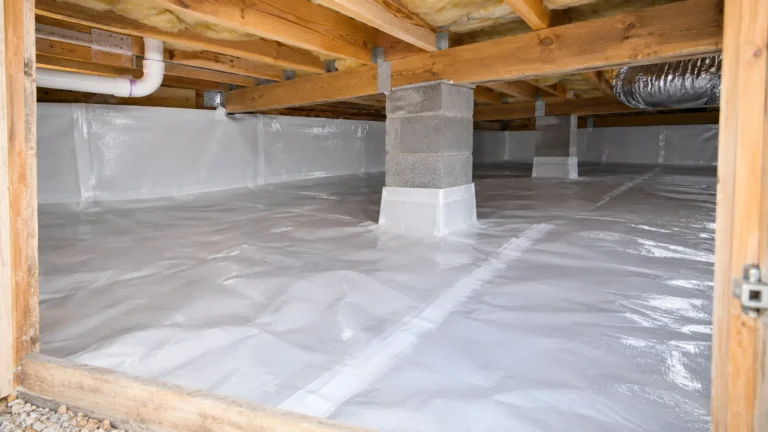
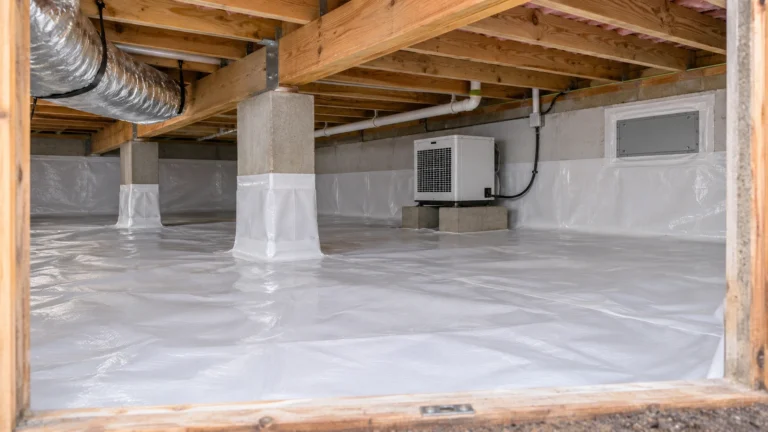
Converting to a closed design involves more than vent covers. DOE’s vented-to-unvented checklist describes sealing the openings, covering the ground with a vapor barrier connected to the walls, insulating and air sealing the exterior walls and rim area, and addressing how the space will be conditioned. Water and drainage problems are investigated before work begins.
Our guide to what crawl space encapsulation includes covers the scope in more detail. Ask a contractor which surfaces form the new thermal boundary, how humidity will be monitored, and what happens to any old insulation beneath the floor.
Ground moisture and bulk water first
Even a vented crawl space benefits from a continuous crawl space vapor barrier over exposed soil, according to DOE. A barrier slows soil vapor; it does not fix standing water. Gutters, grading, drainage, and plumbing must be checked first. Source: Building America ground-cover guide.
If you see puddles after rain, our guide to water in a crawl space explains what to record and when to seek qualified help. Do not cover water damage with new insulation or seal the space over an unresolved leak.
Insulation and humidity strategy
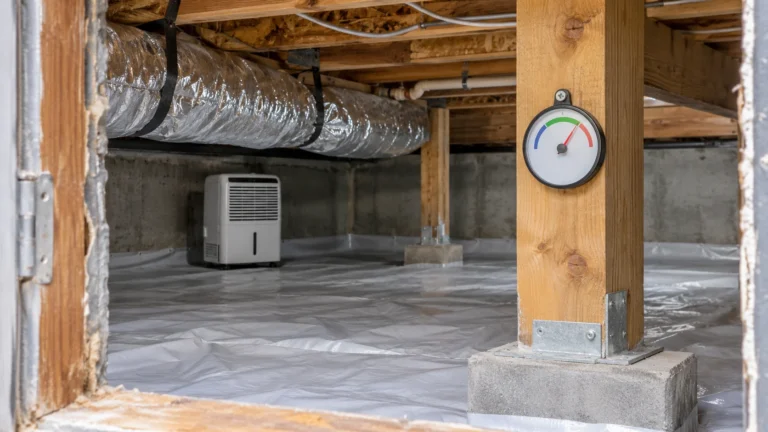
In a vented design, the floor above the crawl space generally forms the insulated boundary. In a properly conditioned unvented design, the foundation walls become part of it. Our crawl space insulation guide explains the placement. The closed space also needs a way to manage humidity, which might involve conditioned air or suitable dehumidification depending on the design. DOE’s unvented crawl-space guidance treats these details as connected.
When should vents not be sealed without specialist advice?
Local building and flood requirements matter. In a flood-prone area, openings may be flood vents intended to let water move through a foundation and equalize pressure. DOE notes that flood vents have a different role from ordinary crawl-space ventilation openings and that closable air vents should not be treated as flood vents. Source: Building America flood-resistant foundations.
Natural-draft combustion appliances, radon concerns, pest inspection requirements, and local insulation rules can also affect a conversion. DOE’s pre-retrofit assessment advises checking applicable local requirements before insulating or adding conditioned air. Ask a qualified contractor to identify the existing openings and equipment, then explain the proposed compliant design.
How should you decide for your house?
Ask for an inspection that records the following:
- Existing design: Are the vents ordinary ventilation openings or required flood openings? Is the floor above or the foundation wall currently insulated?
- Water and moisture: Is there standing water, an uncovered dirt floor, damp framing, or a plumbing or drainage issue?
- Climate and equipment: Does humid outdoor air condense on cool surfaces? Are ducts, pipes, or combustion appliances in the space?
- Proposed change: If vents are sealed, what insulation, ground barrier, humidity control, radon checks, and maintenance are included?
Compare the written scope and findings, not a promise that “closed is always better” or “open is always better.” The right answer depends on the house and its site.
Common questions
Is it okay to close only the vents and do nothing else?
That is not a complete conversion. A sealed, conditioned space also needs water management, a continuous ground barrier, appropriate insulation and air boundary, and humidity control. Source: DOE conversion checklist.
Do vents remove moisture from a crawl space?
They can exchange air with outdoors, but outside air is not always drier. In humid weather, it may add moisture and cause condensation on cool framing. Look for the actual moisture source before assuming more ventilation will dry the space. Source: DOE unvented crawl-space guide.
Can I use a dehumidifier and leave the vents open?
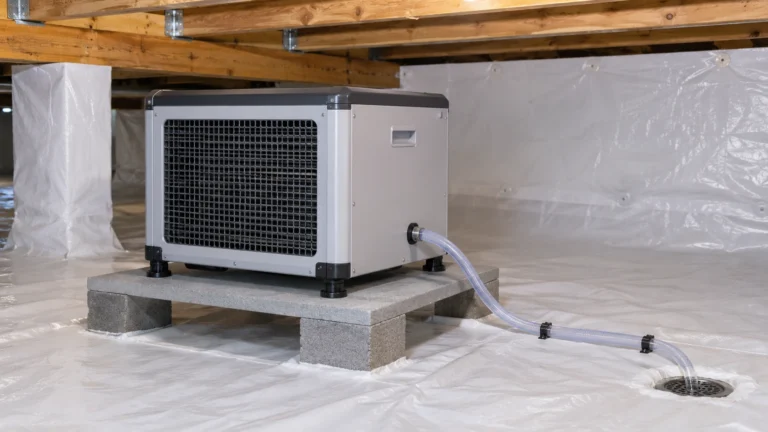
A unit may struggle if humid outside air keeps entering through open vents. Have the enclosure and moisture source assessed before buying equipment. Our crawl space dehumidifier guide explains when one helps and how it should be sized.
The takeaway
Treat crawl-space vents as part of a complete building design, not a switch to flip twice a year. Identify the existing vented or conditioned assembly, fix water sources, and check local requirements. Then choose a moisture, insulation, and air-control plan that makes sense for the house.