Crawl Space Moisture Control: Find the Cause and Keep It Dry
How do you control moisture in a crawl space?
Start by finding how moisture enters, then match the repair to the source. Water may arrive as a plumbing leak or rainwater, vapor rising from exposed soil, or humid air entering and condensing on cool surfaces. Those problems need different fixes. A dehumidifier can lower air humidity, but it cannot repair a pipe; a vapor barrier can limit soil moisture, but it cannot redirect a downspout.
The U.S. Department of Energy’s crawl-space assessment guide lists exterior runoff, plumbing, HVAC condensate, exposed earth, sump pits, and humid outside air as possible sources. Take time to identify which are present before choosing products. If there is standing water, our guide to water in a crawl space covers safe first steps.
Signs that the space needs attention
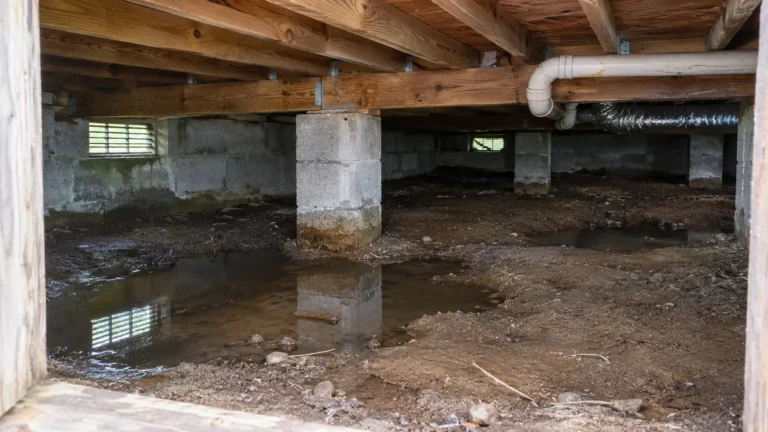
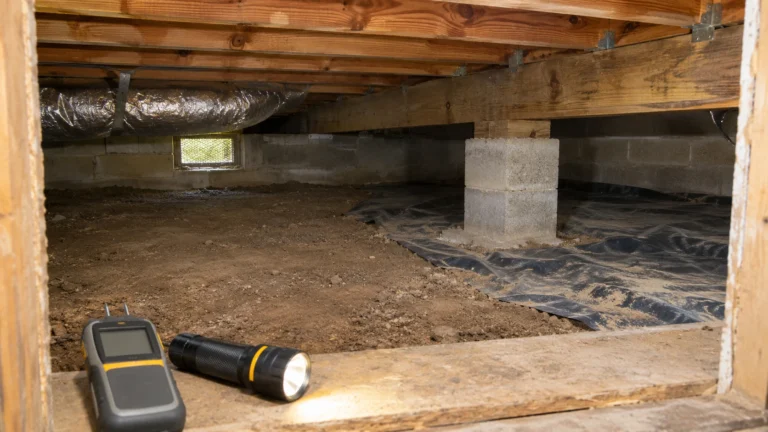
Look from a safe access point for puddles, water stains, wet or sagging insulation, condensation, musty odors, visible growth, a torn ground liner, or deteriorating wood. Note whether the symptoms appear after rain, during humid weather, or when plumbing and equipment are in use. DOE’s inspection guide recommends checking moisture, insulation, ventilation, and structural conditions together.
Do not enter pooled water near wiring or damaged equipment. Suspected sewage, significant mold, unsafe framing, or exposed wiring calls for qualified help. Photos and a dated record from a safe location can make a professional inspection more useful.
Separate the three main moisture routes
Liquid water: rain, groundwater, or leaks
Water that pools after a storm may come from overflowing gutters, short downspouts, ground sloping toward the foundation, an access opening, or groundwater. Water present during dry weather may point to plumbing or equipment. These are clues, not proof of the exact route. DOE says standing water or evidence of seasonal water should be investigated and treated before air sealing or insulation. Source: Building America.
Start with the source: repair leaks, move roof and surface water away, and design drainage if the site needs it. Our crawl space waterproofing guide explains the role of grading, drains, and sump pumps. A liner or new insulation installed over wet materials can conceal the problem.
Vapor rising from soil
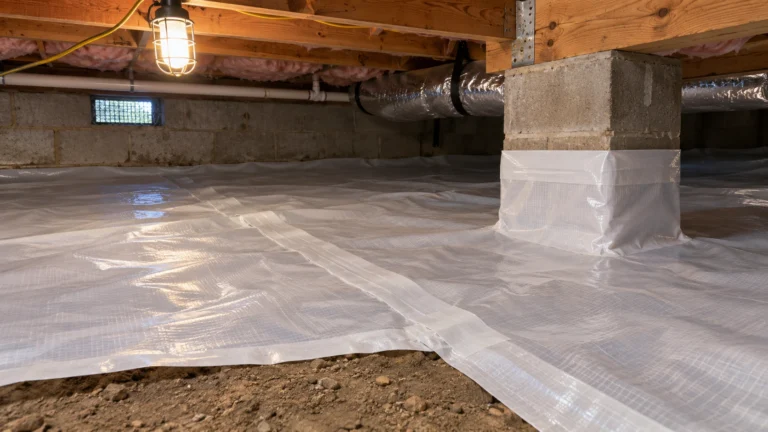
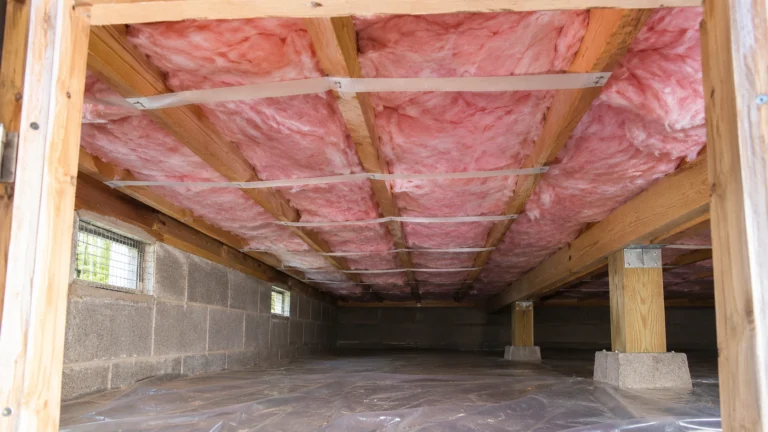
Even without a puddle, exposed dirt can release moisture into the crawl space. DOE recommends a continuous ground cover sealed at seams, walls, and piers in both vented and unvented spaces. Source: Building America.
The details matter: a loose sheet that stops short of the foundation or has open seams leaves soil exposed. Our crawl space vapor barrier guide explains what to check in a quote. The ground cover does not substitute for a drain when water enters as a liquid.
Humid air and condensation
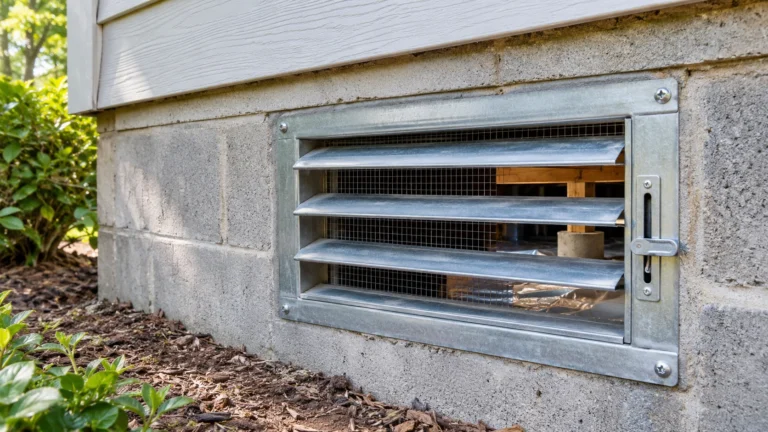
Warm, humid outside air can enter through vents or gaps and condense on cooler framing or ducts. This can be a particular problem in humid climates. DOE cautions that vents can sometimes add moisture rather than remove it. Source: Building America.
The response depends on whether the house has a vented or a properly designed sealed crawl space. Read our guide to crawl space vents open or closed before changing an existing design. Simply blocking vents without a ground, insulation, and humidity plan does not create a conditioned space.
What order should the work follow?
- Make the area safe and remove standing water. Keep clear of electrical and structural hazards; use qualified help for flooding or contamination. Dry wet materials promptly.
- Fix the cause of liquid water. Inspect plumbing, HVAC condensate, gutters, downspouts, grading, access openings, and drainage. Confirm where collected water will discharge.
- Control soil moisture. Repair or install an appropriate continuous ground vapor barrier, with seams and edges connected.
- Choose the correct air and insulation design. Decide whether the space remains vented and insulated at the floor above or becomes an appropriately conditioned space insulated at the foundation walls.
- Manage residual humidity and monitor. Measure conditions after repairs, especially through the next rain or humid season. Add equipment only when the design and readings support it.
DOE’s water-management guidance puts drainage and bulk-water control ahead of sealing and insulating. The order prevents a new liner or insulation from hiding an active problem.
When is a dehumidifier useful?
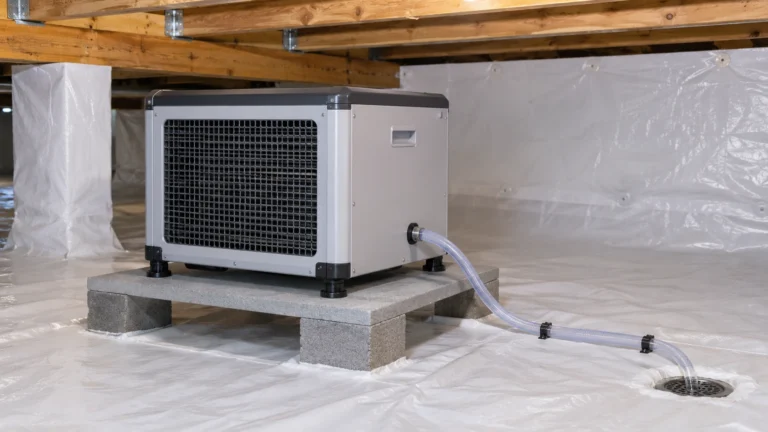
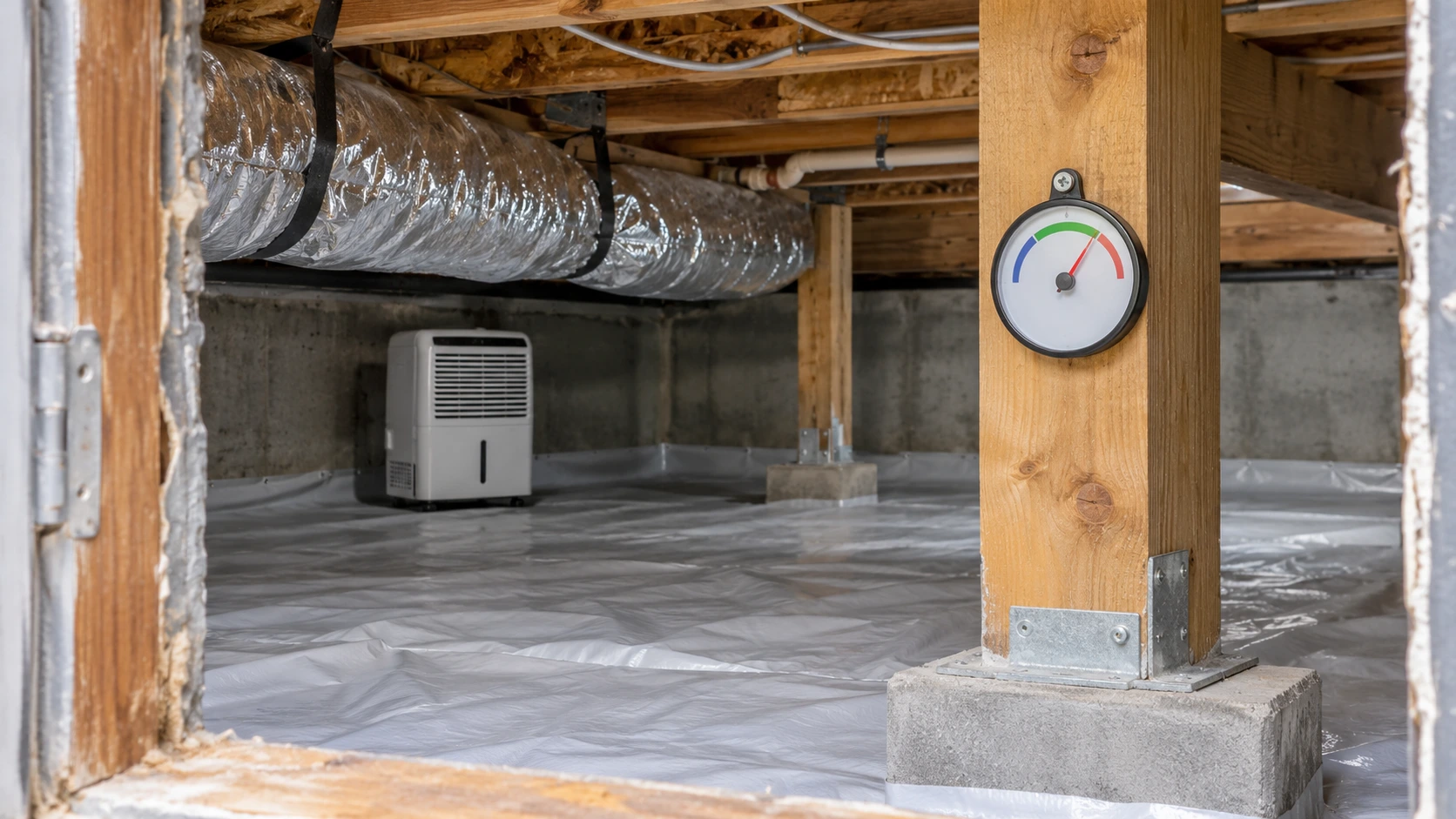
A crawl space dehumidifier may help manage remaining air humidity in a suitable enclosed space after leaks, drainage, and exposed soil have been addressed. A unit in a vented space with humid air continuously entering may run hard without solving the source. Size it based on area and actual dampness, and plan where collected water will drain. ENERGY STAR says both size and pre-existing dampness matter when choosing capacity. Source: ENERGY STAR.
The EPA recommends keeping indoor relative humidity below 60%, ideally 30%–50% where possible, to help prevent mold. Source: EPA mold and moisture guide. Treat that as indoor guidance, not a universal prescription for every crawl-space assembly. Record humidity over time and ask a qualified professional what is appropriate for the house.
Does encapsulation solve every moisture problem?
No. A well-designed crawl space encapsulation project may combine ground coverage, air sealing, wall insulation, and humidity control. It still needs a repair plan for active leaks and drainage. DOE calls for dealing with bulk water before converting a vented space to a sealed, insulated one. Source: Building America.
Ask a contractor which moisture route each proposed component addresses. A drain, vapor barrier, and dehumidifier solve different parts of a problem. An itemized quote helps you see whether water repair and cleanup are included or priced separately.
How do you know the fix is working?
Check for new puddles or stains after significant rain. Record relative humidity over time, verify that the ground liner remains sealed, and inspect visible insulation and wood for dampness. If a sump or dehumidifier is installed, check that it operates and discharges water properly. DOE recommends a period of post-retrofit monitoring for a sealed crawl space, including temperature, humidity, and wood moisture where appropriate. Source: Building America.
If the symptoms return, investigate again rather than assuming the same fix will work a second time. A new plumbing leak can appear after an earlier runoff problem was corrected.
Common questions
Is a damp crawl space always caused by groundwater?
Not necessarily. In humid weather, outside air can add moisture and condense on cooler surfaces. A vented or unvented strategy needs to be designed as a complete system. Source: DOE unvented crawl-space guide.
Can mold be fixed without correcting the water source?
No lasting moisture-control plan can ignore the source. The EPA says mold cleanup and repair of the water problem go together. Source: EPA mold guide
The takeaway
Crawl space moisture control is a sequence: identify water and vapor routes, fix liquid-water sources, cover exposed soil, choose the right venting and insulation design, then monitor humidity and materials. Each measure should address a specific cause found in the house.